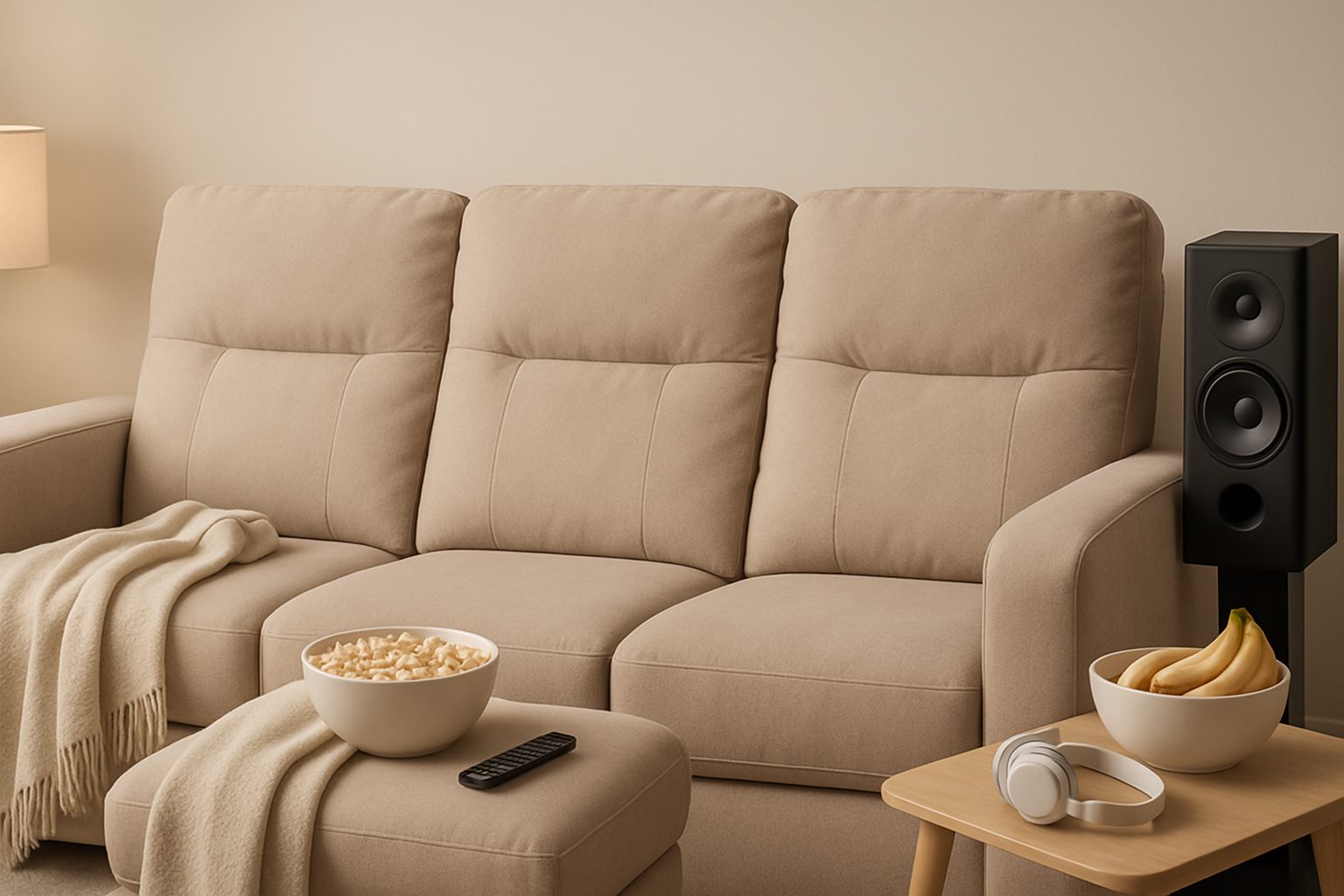
How to Choose Home Cinema Seating: The UK Buyer's Checklist
Buying home cinema seating is one of the bigger decisions you'll make when building a decent viewing room. You're looking at several years of use, so getting it right the first time matters. This guide walks you through the key decisions you need to make before you spend your money.
Measure Your Room First
Before you look at a single seat, you need to understand your space. Measure the length and width of the room you're fitting out, and note the distance from where you'll sit to where your screen will be. This distance determines everything else.
UK homes vary wildly—you might have a dedicated cinema room or a corner of your living room doubling up as a viewing space. The standard sight lines for cinema seating suggest you should sit at an angle no steeper than 35 degrees from the top of the screen and no flatter than 15 degrees from the bottom. If your viewing distance is too short, even a large screen will feel cramped and tiring.
As a rough guide:
- Under 2.5 metres: you're limited to smaller screens (55-65 inches)
- 2.5–4 metres: your sweet spot for 75-85 inch screens
- Over 4 metres: you can go 85 inches or larger
Note any alcoves, pillars, or doors that might restrict where you can place seating rows.
Decide How Many Rows You Actually Need
This comes down to how many people you're typically seating. A single row of three seats is the most common setup in UK homes. It's intimate, avoids the awkward middle seat problem, and doesn't demand a huge footprint.
Two rows work well if you regularly host groups or have a family that wants proper separation. Front row should be reclined slightly lower than the back row so rear viewers aren't blocked. This adds real cost—not just the extra seats, but the depth of room you'll need. You'll need at least 1.5 metres between rows to avoid that cramped feeling.
If you've got a larger dedicated room, a three-row setup creates a proper cinema feel, but realistically, most UK homes don't have the space. Two rows max in most cases.
Screen Distance and Viewing Angle
Your seating position relative to the screen matters more than most people realise. Seats that are too close make the image feel overwhelming and cause neck strain. Seats too far away and you lose fine detail in 4K content.
The rule many use: divide your screen diagonal (in inches) by 1.2. If you have an 85-inch screen, that's roughly 70 inches or 1.8 metres as an ideal viewing distance. Some prefer slightly closer (divide by 1.5 instead), especially if you watch a lot of sports or gaming.
Vertical angle is equally important. Your eyes should aim toward the middle third of the screen, not up or down. If your screen sits on a wall above eye level, you'll tilt your neck upwards constantly—uncomfortable after two hours. Wall-mounted screens work best when the centre sits roughly at eye level when you're settled into the seat.
Fabric and Durability
Your seating fabric matters for both comfort and longevity. In UK homes, you're dealing with variable humidity, dust, and (let's be honest) spilled drinks.
Leather and faux leather are the standard in cinema seating. Real leather breathes but costs more and requires maintenance in damp rooms. Faux leather is cheaper, more forgiving, and genuinely practical. It wipes clean and resists staining.
Fabric upholstery feels softer and warmer but absorbs dust and moisture more readily. You'll need to think about vacuuming and cleaning schedules. Microsuede and microfibre are the better options here—they're durable and easier to maintain than plain cotton blends.
Colour choices might seem obvious, but dark colours (black, charcoal, dark grey) are forgiving in a cinema environment and don't reflect stray light from the screen. Light fabrics might look nice in photos but show every dust particle and potential stain.
Budget and What It Covers
Home cinema seating ranges wildly in price. A decent single-seat recliner starts around £400–600. A three-seat row of quality recliners will set you back £1,200–2,500 depending on features.
Premium options (£3,000+) usually add motorised recline, cup holders, heated seats, and USB charging. These are nice if you can afford them, but they're not necessary for a genuinely good cinema experience. The core thing you're paying for is the mechanism and comfort—those matter. Motorised recline is genuinely useful if anyone in your household struggles with manual levers.
Don't forget ancillary costs: delivery (often £200–400 for multiple pieces), wall brackets if you're going mounted, and potentially a small amount of acoustic treatment if your seating position sits next to a reflective wall.
Putting It Together
Start by measuring your room and defining how many people you're seating. Work backwards from your screen distance to figure out how many rows will fit. Then decide whether you want fabric or leather based on how you live—humidity, pets, kids, frequency of spills.
Visit showrooms if you can. Recliners feel different in person, and mechanism quality is something you really need to test. Some use ball-bearing slides; others use cheaper plastic runners. It matters after a thousand uses.
Your seating is the one element of your cinema that touches your body for hours every week. It's worth getting right.
More options
- Home Cinema Recliner Chairs — Amazon UK (Amazon UK)
- Electric Power Recliner Sofa — Amazon UK (Amazon UK)
- Home Cinema Seating Row with Cup Holders — Amazon UK (Amazon UK)
- Leather Home Cinema Chair — Amazon UK (Amazon UK)
- Home Cinema Pod & Capsule Chair — Amazon UK (Amazon UK)