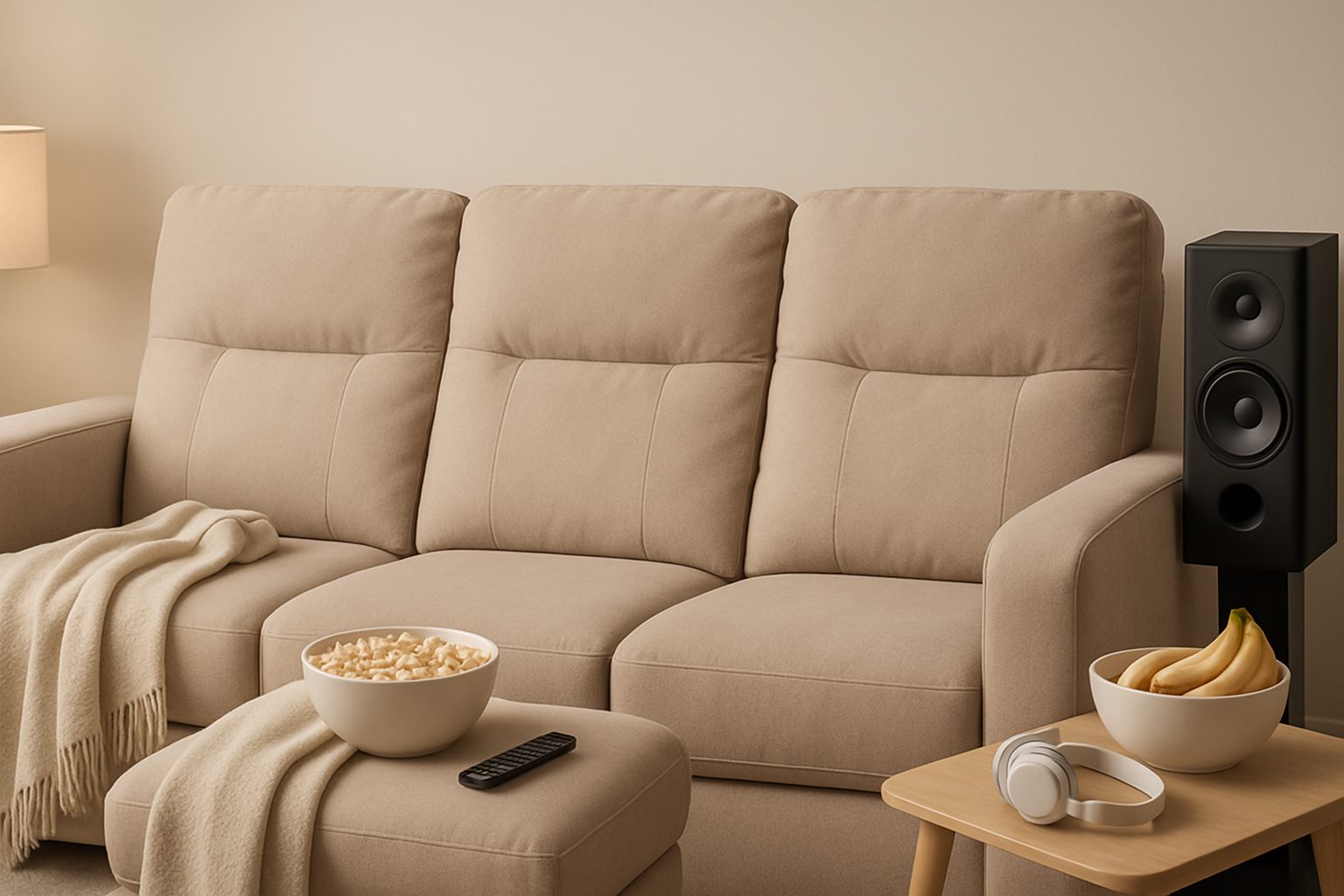
Home Cinema Seats vs Regular Sofas: Which Should You Actually Buy?
The moment you start planning a home cinema setup, someone will tell you that you absolutely need dedicated cinema seating. That's not entirely true—and it's worth understanding why before you commit £2,000 to £5,000 on recliners that might regret buying in two years.
The choice between cinema seats and a regular sofa isn't straightforward. It depends on how you actually use your living room, your budget, and whether you're buying something you'll love or a novelty that loses its appeal. Let's work through the real considerations.
Why Cinema Seats Are Genuinely Better for Viewing
If you're serious about watching films, dedicated cinema seating does several things better than a sofa.
First, the ergonomics are purpose-built. Cinema recliners have footrests that extend fully, backrest angles that adjust to around 150 degrees, and proper lumbar support designed for hours of viewing. Your spine stays neutral rather than hunching into the soft embrace of a regular sofa, which feels comfortable at first but leaves you sore after a two-hour film. The seating geometry—deeper seats, angled bases, higher armrests—is actually engineered for stationary viewing.
Second, they maximise your screen sightline. Cinema seats position you at the ideal distance from your display, with the backrest angled so you're looking straight ahead rather than craning your neck slightly upward. That sounds minor until you watch a four-hour film and realise your neck hasn't hurt once.
Third, they're built to handle ancillary features. If you're spending the money anyway, you can get seats with built-in cup holders, pop-up tables, massage functions, or USB charging ports. These are practical conveniences when you're settled in for an evening—less getting up to fetch drinks.
Fourth, they feel more intentional. There's a psychological component to sitting in a "cinema seat": it signals to your brain that this is dedicated media consumption time, not casual lounging. That mindset shift, however subtle, changes how you experience the content.
The Honest Drawbacks of Cinema Seats
But here's where cost and practicality kick in.
Cinema recliners are expensive. A decent pair in the UK runs £1,500 to £4,000. For a three-seater sofa of comparable comfort and finish, you're looking at £800 to £1,500. That money matters, and the recliners need to justify the premium.
They're also inflexible. A sofa can be part of your room's casual furniture landscape—somewhere to sit while working, reading, or talking on the phone. A cinema recliner, especially a large one, is strictly for sitting and relaxing. If you're someone who uses your living room for other activities, they feel overly specialised and take up disproportionate floor space.
Resale value is poor. A high-end recliner holds perhaps 40-50% of its value after three to five years, assuming you've looked after it well. Sofas, whilst depreciating too, tend to hold slightly better value if they're a quality piece. Cinema seating is harder to sell privately because demand is limited—most buyers for home cinema gear want to choose their own recliners rather than inherit someone else's.
They also require the right environment. You need enough space (usually a dedicated cinema room, or at least a large living room) and good cable management to hide the power cords. If you ever move house, transporting a heavy recliner is a hassle. Sofas move more easily.
When a Regular Sofa Is the Right Call
A good-quality sofa wins if any of these apply to you:
You're furnishing a multipurpose room. Your living room needs to work as a social space, a work area, and occasionally a cinema. A sofa serves all three. A recliner is mono-purpose.
You move house regularly. Sofas are easier to transport and fit into different room layouts.
You watch films sporadically. If you're watching one or two films per week rather than spending several evenings weekly in your cinema, the ergonomic advantage doesn't justify the cost.
You want flexibility to change your setup. Sofas come in different styles, colours, and configurations. If your décor or priorities shift, replacing a sofa is more straightforward than rehoming a cinema recliner.
You're budget-conscious. A £1,200 sofa often provides better comfort for general living than a £2,500 recliner does for cinema viewing alone.
The Middle Ground
Some buyers find a compromise: invest in one high-quality cinema seat for yourself, paired with a standard sofa for guests or general living. This lets you get the viewing experience you want without over-committing to the format.
Alternatively, look at higher-end sofas specifically designed for comfort—not cinema-specific, but with better ergonomics than standard fare. Brands targeting this space are increasingly common in the UK, and they retain versatility while improving on standard sofa viewing experience.
Who Should Buy Cinema Seats
Cinema seating makes genuine sense if you're a heavy viewer with a dedicated room, reasonable budget, no plans to move soon, and a living room where the recliners don't compromise other activities. If you're building a proper home cinema—with acoustic treatment, lighting control, and a quality projector—then purpose-built seating completes the picture logically.
But if you're hoping seating alone will transform casual film-watching into a cinematic experience, you'll likely be disappointed. The screen quality, room acoustics, and lighting matter more.
The Honest Conclusion
Neither option is universally correct. A good sofa handles 80% of what most homes need from seating. Cinema recliners excel at the remaining 20%—but that 20% needs to genuinely matter to you, and you need to live with the trade-offs. Buy cinema seats because you'll use them heavily for years, not because you feel like you should.
More options
- Home Cinema Recliner Chairs — Amazon UK (Amazon UK)
- Electric Power Recliner Sofa — Amazon UK (Amazon UK)
- Home Cinema Seating Row with Cup Holders — Amazon UK (Amazon UK)
- Leather Home Cinema Chair — Amazon UK (Amazon UK)
- Home Cinema Pod & Capsule Chair — Amazon UK (Amazon UK)