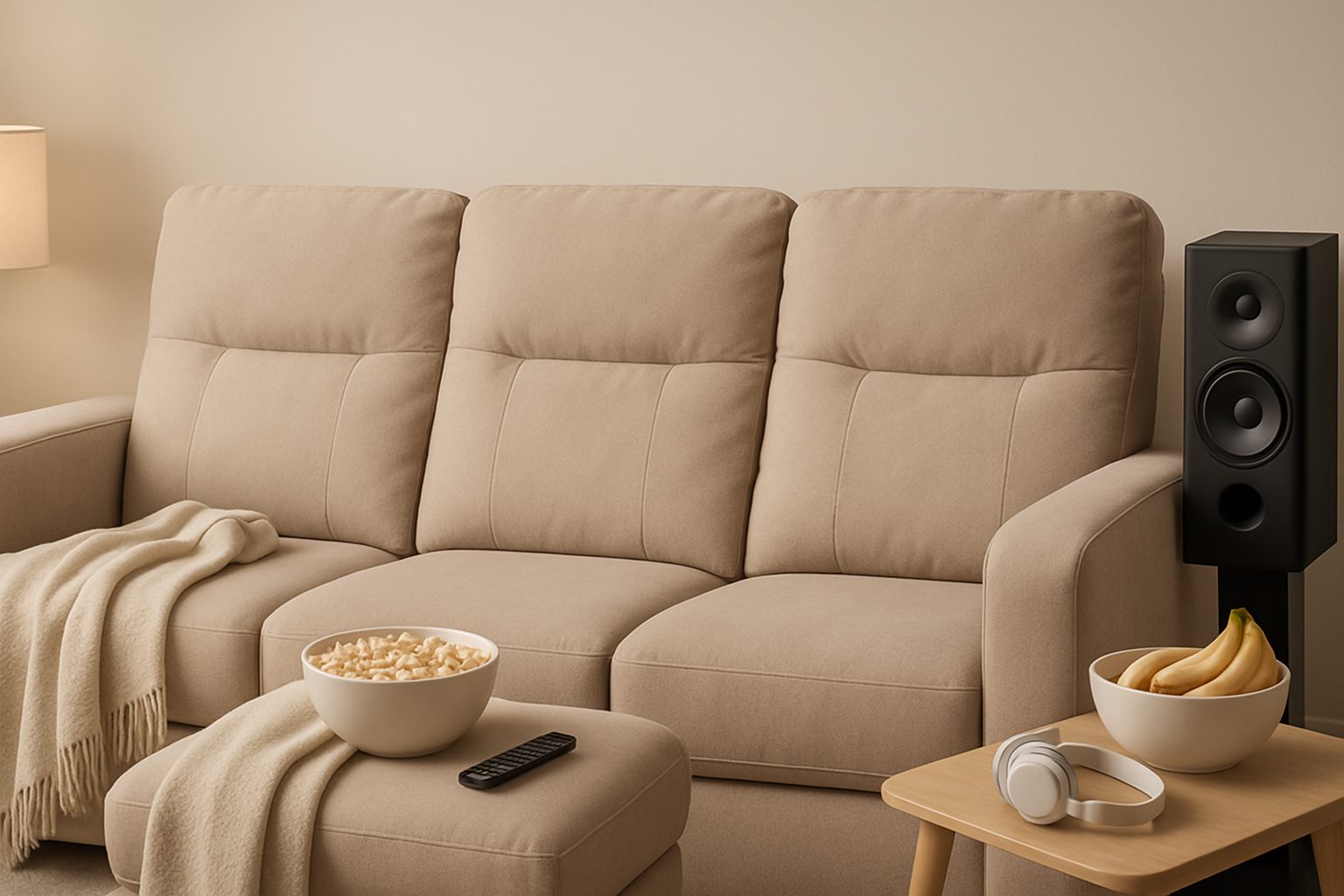
Best Electric Recliner Home Cinema Seats UK: Power Recline Reviewed
A decent home cinema setup starts with seating. You can have pristine picture and sound, but if you're sitting on a stiff sofa for two hours, the experience falls flat. Electric recliner cinema seats bridge the gap between comfort and practicality—they let you adjust your recline angle with a button press rather than wrestling with levers or getting up mid-film.
The motorised approach makes sense for dedicated viewing rooms. You're sat down for the duration, so being able to tweak your position without disrupting the moment matters. But electric recliners aren't just about convenience. The quieter models won't intrude on dialogue or atmospheric scenes, and features like memory positions mean you can dial in your perfect angle once, then return to it every time.
Why power recline works for home cinema
Traditional manual recliners require you to get up or lean forward to operate the lever. Electric models eliminate that friction entirely. You're holding a remote—not much different from adjusting your TV volume. For watching films back-to-back, or if you have mobility considerations, this makes a genuine difference.
More importantly for cinema, motorised recline lets you make micro-adjustments. Your neck gets stiff after an hour? Recline a few degrees without hauling yourself out of the seat. You want to sit more upright for a thriller but full-flat for a comfort rewatch? The remote handles both. This flexibility is harder to achieve with fixed manual mechanisms.
Key features worth your attention
Motor quietness tops the list for cinema seating. A whirring, clicking motor will pull you out of quiet scenes. Look for models that advertise low-decibel operation—ideally 50dB or less if you can find spec sheets. Whisper-quiet motors exist and make a measurable difference. Some models use direct-drive systems rather than gear-based mechanisms, and these tend to be noticeably smoother and quieter.
Memory positions are genuinely useful. A one-touch button that returns the seat to your preset recline angle and footrest height saves constant fiddling. Some premium models offer two or three memory slots, so different household members can save their preferred angles.
Footrest and headrest options vary widely. Full-length footrests are more comfortable than stub versions, especially if you're watching films for hours. Headrests that recline with the backrest beat fixed ones. Some models add neck support or adjustable lumbar cushions, which matter if you're prone to lower-back complaints.
Build quality directly affects longevity. Look at frame construction—hardwood or reinforced plywood beats soft-wood frames that can sag. Check seam construction on upholstery; stitching should be tight and consistent. The mechanisms—motors, rails, linkages—are harder to inspect in photos, so reading owner experiences here pays off.
Motor noise and cinema viewing
This deserves its own section because it's often overlooked. A loud recliner motor pulls focus from the viewing experience. Premium models in the £1,500+ bracket typically use better motors than budget options, but price doesn't guarantee quiet operation. Some mid-range models actually outperform expensive ones for noise levels.
Test before buying if possible—watch video demos online or read specific reviews mentioning motor sound. Common complaints about cheap models include grinding noises during recline, stuttering motion, or a high-pitched whine. None of these make for pleasant cinema experiences.
Electric recliners also need power sockets nearby. Most hardwired models plug directly into the wall rather than running on batteries. This is worth planning during room layout—you don't want extension cables running visibly across your viewing area.
Convenience features beyond recline
USB charging ports built into the armrests are increasingly common. They're genuinely handy if you're watching whilst keeping a phone or tablet topped up. Some models include cup holders, storage under the seat, or side tables. These add comfort without adding complexity.
Heated and massage functions exist on pricier models. These are comfort-focused rather than essential for cinema viewing, but if you spend considerable time in the seat, they're worth considering. They do add cost and potential maintenance points, though.
What to consider before buying
Room dimensions matter more than you'd think. Electric recliners need clearance to recline fully—typically 60-90cm of space behind the seat. Measure your room properly. If space is tight, some models offer wall-hugging designs that recline whilst taking up less rear clearance.
Upholstery choice affects durability and feel. Genuine leather looks premium but requires regular cleaning to prevent stains from setting. Faux leather and microfibre upholstery are more forgiving and often easier to maintain. Consider your household situation—pets, children, or frequent use all favour tougher materials.
Weight capacity is listed on most models and matters if anyone using the seat is heavier. Most cinema recliners comfortably handle 120-150kg, but check spec sheets rather than assuming.
Warranty and after-sales support separate decent manufacturers from cowboys. Look for companies offering at least two years' parts coverage and motor warranties. If the motor fails at year three and you've no recourse, you're looking at expensive repair costs.
Making the most of your investment
Once you've chosen your seat, positioning in the room is worth getting right. The viewing distance and angle to your screen should follow standard home cinema recommendations—roughly 1.5 to 2.5 times screen width away, with the middle of the screen at eye level when you're sat back. Electric recliners help here because you can fine-tune your recline to match these angles.
Quality electric cinema seating is a long-term purchase. A well-made model should give you ten years or more of reliable use. Take time choosing, read owner experiences from actual buyers, and don't assume the most expensive option is best—occasionally, mid-range models outperform premium ones on the features that matter most for cinema viewing.
More options
- Home Cinema Recliner Chairs — Amazon UK (Amazon UK)
- Electric Power Recliner Sofa — Amazon UK (Amazon UK)
- Home Cinema Seating Row with Cup Holders — Amazon UK (Amazon UK)
- Leather Home Cinema Chair — Amazon UK (Amazon UK)
- Home Cinema Pod & Capsule Chair — Amazon UK (Amazon UK)